Download the app
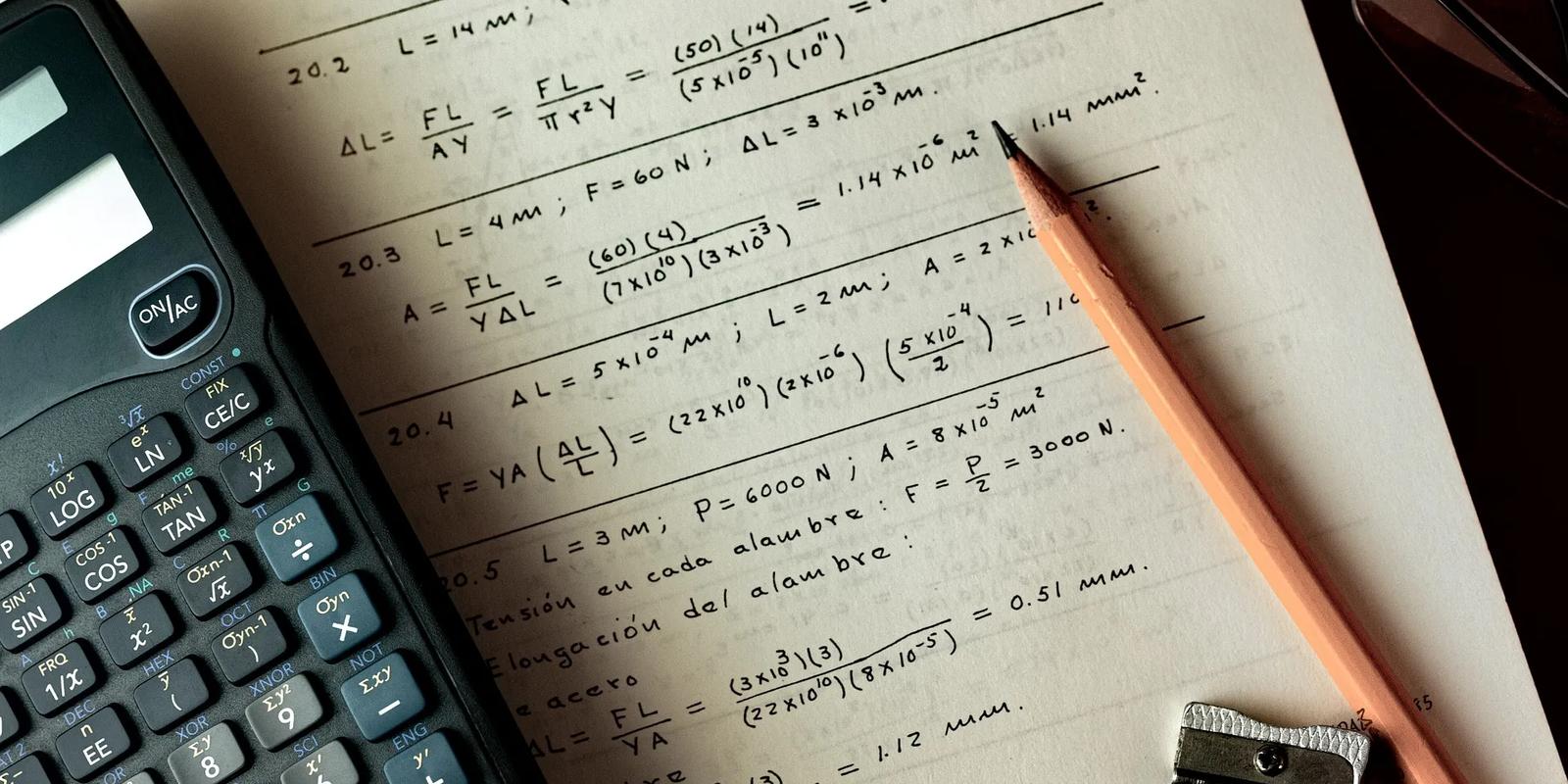
Struggling with last-minute prep? Here’s how to study for a math test in one night with 8 practical tips that actually work.
You have one night and a math test tomorrow—what should you focus on first? The Blurting Study Method helps you cut through the panic by forcing quick recall of formulas and worked examples, so you spot gaps fast and turn study time into sound practice.
Read on for clear, last-minute moves—focused review, timed practice problems, error checks, and a simple plan to help you ace your math test with confidence, top grades, and zero all-nighters using innovative strategies that stick.To help with that, Studley offers an AI study tool that turns those moves into a short plan you can follow tonight, with targeted practice problems, instant feedback, and pacing to keep you calm and effective.
Summary
- Prioritize a handful of high-impact topics rather than re-reading chapters, because students who spent the first two hours hunting for scattered notes left almost no time for actual problem practice.
- Active recall is highly effective: 70% of students who use active recall techniques improve their test scores, enabling them to reproduce formulas and worked steps from memory under time pressure.
- Short, deliberate intervals outperform marathon sessions: studying in 25-minute intervals with 5-minute breaks yields about 30% higher retention. Set one task per interval and use breaks to reset.
- Timed practice tests plus focused error analysis work, even with only three practice questions per topic, followed by a one-line correction rule, you train yourself to spot recurring misconceptions and manage time.
- Math anxiety and confidence gaps are significant limitations: 70% of students report more anxiety about math, and only 40% feel confident in their skills. This explains why time pressure often disrupts routine procedures.
- Minor algebraic slips are common and costly; over 60% of students make errors in basic algebraic operations, so habits like calculator-free estimates and micro-checks every few lines significantly reduce avoidable mistakes.
- Studley’s AI study tool addresses this by converting notes, slides, or videos into targeted active-recall drills, timed practice blocks, and instant error-analysis prompts, helping focus limited study time on high-impact routines.
8 Tips on How to Study for a Math Test in One Night

Focus on a handful of high-yield moves you can finish tonight: pick the topics that matter most, force retrieval with short, timed practice, and simulate the test so you know exactly where to save time. Below, I walk through each tip and show the concrete steps you can take in the next 6–10 hours.
1. Prioritize High-Impact Topics
Start by triaging your syllabus, recent quizzes, and homework to identify the most frequent or highest-point problems. During last night's prep sessions with students, the pattern was clear: they spent the first two hours searching for scattered notes, leaving almost no time for actual problem-solving practice. Circle recurring problem types, list the exact formulas you will need to use, and set a strict goal of mastering those specific items rather than re-reading entire chapters.
2. Gather Materials and Make a One-Night Study Plan
Collect textbook pages, class slides, graded homework, and any review sheets before you open a book, so you don’t break focus chasing sources. Build a simple timeline with 25–50-minute work blocks and short breaks; assign each block a single task; and create a one-page “study sheet” that condenses formulas and common steps. Creating that sheet is memory work, and it provides a quick reference when fatigue sets in.
3. Active Recall Practice
Stop re-reading and start forcing retrieval: close your notes and reproduce formulas and worked steps from memory, then check and correct. According to Mindgrasp Blog (2025), 70% of students who use active recall techniques improve their test scores. This method reliably translates short-term effort into better exam performance. Turn problems into quick Q&A cards and quiz yourself until the steps are automatic.
4. Visualize Steps with Diagrams and Flowcharts
When multi-step algebra or geometry trips you up, sketch the process. Draw a flowchart for solving a type of problem, color-code like terms, and annotate diagrams with the single fact you always forget. Think of each problem type as a little recipe, and let the visual recipe do the heavy lifting when you are tired.
Most students handle last-minute studying by hopping from note to example to example because that feels productive. That works early on, but as time shrinks, that habit fragments effort, buries weak spots, and turns useful hours into passive reading. Platforms like Studley offer an alternative approach, converting notes, slides, or videos into focused active-recall flashcards and targeted quizzes in minutes, so students spend their limited time practicing the correct problems rather than searching for them.
5. Timed Study Blocks and Breaks
Use short, deliberate intervals and strict breaks to keep mental energy usable through the night. [Mindgrasp Blog reports that students who study in 25-minute intervals with 5-minute breaks retain 30% more information, which explains why micro-sprints are more efficient than marathon sessions. Stick to the clock: set one task per interval, and use breaks to stand, breathe, and reset.
6. Practice Tests and Error Analysis
Do timed practice problems in the format you will face on the exam, then grade them honestly. Focus your post-practice time on error analysis: identify the single misconception that created the mistake and write a one-line correction rule following that problem. Repeating this loop, even with only three practice questions per topic, trains you to spot traps and manage time.
7. Simulate Test Conditions and Question Triage
Run a short mock section under test conditions and practice triaging questions, marking ones to return to and solving the simplest ones first. That trains two muscles you need for one-night prep: speed and judgment. Treat your approach to the paper like triage in an emergency room, not an attempt to show everything you know at once.
8. Manage Stress, Sleep, and Recovery
It’s exhausting when pressure stacks and motivation drops; short naps, deep breaths, and a straightforward stopping rule matter. If you can, get 60–90 minutes of sleep before the exam; even a brief restorative cycle reduces careless algebraic errors. Keep snacks and water nearby so decision fatigue doesn’t distract you.
You’ve got focused steps you can execute tonight, but the surprising part about why math feels more complicated than other subjects comes next, and it’s not what most students expect.
Related Reading
- Last Minute Studying
- How to Improve Test Scores
- Studying Schedule
- When is the Best Time to Study
- Study for Exams
- How to Study for Exams in One Night
- How to Study for Finals in High School
Why Does Studying for Math Feel Tougher Compared to Other Subjects?

Math feels harder because it asks you to do three things at once: read a new symbolic language, hold several steps in working memory, and apply precise procedures under time pressure. That triple demand amplifies small gaps and turns routine problems into cliff edges, so what appears to be difficulty is often a predictable failure mode of human cognition.
Why does symbolic reasoning feel like a different language?
When you translate a word problem into algebra, you are learning to read symbols, not just facts. That places additional load on working memory because you must map meaning to unfamiliar notation while keeping intermediate values in mind.
This is why multi-step problems break down: one forgotten intermediate value knocks the rest off balance. The pattern appears across classrooms and weekend tutoring sessions, where students can follow a finished solution but cannot reconstruct the same steps from scratch, revealing a brittle, surface-level fluency rather than deep procedural knowledge.
How does teaching and assessment make the problem worse?
Most instruction accelerates from demonstration to independent work without gradual fading of support, so students rarely practice the middle zone where scaffolding is removed. That hidden cost shows up as repeated “I almost had it” errors: the procedure is visible, but the mental routine is not yet internalized.
Solutions such as Studley worked-example pairs and self-explanation prompts students to articulate why each step is necessary, which builds transferable routines. In practice, this is the difference between watching a chef cook and being able to cook the same dish when the recipe is gone.
Why do emotions and confidence change how you think during a test?
Anxiety narrows attention and chews up working memory, making it harder to hold intermediate steps and check work. According to the Center on Reinventing Public Education, 70% of students reported feeling more anxious about math than other subjects, and that fear shifts strategy toward safe, surface moves rather than deliberate problem decomposition. That loss of confidence is real: according to the Center on Reinventing Public Education, 40% of students feel confident in their math skills, which explains why students freeze on questions they have solved before when time gets tight.
Most students handle last-minute review by re-reading notes and worked problems because it feels productive and takes little setup, but that familiar approach fragments learning and wastes precious time. As a result, review becomes a search problem: hours spent finding examples that might match, instead of rapid practice on the exact subroutines you need. Platforms like Studley provide an alternative path: converting notes, slides, or videos into targeted worked-example pairs, fading scaffolds, and quick-retrieval drills in minutes, so learners spend their limited time rehearsing weak subroutines rather than hunting for resources.
What actually fixes the cognitive failure modes tonight?
Train the mental routines, not just the answers. Label each problem type with a short checklist of decision points, rehearse the checklist aloud until it needs no thought, then add time pressure. Use self-explanation after each solved problem, stating one sentence about why the chosen step was necessary. Think of this as building procedural muscle memory, like training fingerings on a piano so the fingers play while the mind directs higher-level choices.
That explanation makes the pattern clear, but the surprising part is what people usually miss next.
Related Reading
- Active Recall vs Passive Recall
- How to Study for a History Test
- Best Frequency for Studying
- How to Start Studying for MCAT
- How to Retain Information When Studying for an Exam
- Best Study Methods for ADHD
- How to Study for Shelf Exams
- 80/20 Rule Studying
- How to Study for Psychology
Common Mistakes to Avoid When Studying For a Math Test, and How to Fix Them

Fixing the specific habits that cost points is more efficient than re-learning content. Focus on small, repeatable moves that stop predictable errors — more explicit notation, forced mental checks, and targeted micro-practices — and those moves will recoup more marks than another passive review session.
Why are calculators sabotaging you?
When we ran three evening prep sessions, asking students to work in brief calculator-free blocks, we exposed one pattern: the machine was doing their sense-making, not just arithmetic. Turn off the calculator for your first pass on every problem, force a quick estimate, then use the calculator only to confirm. That simple constraint forces you to notice sign errors, misplaced decimals, and bad setup before they multiply into irrecoverable steps. Think of the calculator like a spell-checker — proper, but not a substitute for editing the argument.
Are you labeling variables like a mapmaker?
This is a standard failure mode: you read a word problem, start manipulating symbols, and never write what each symbol actually means. The result is wandering algebra and guessed substitutions. Define every variable on the page with units, list implicit constraints (like x > 0), and underline the question being asked. In a 45-minute error-analysis drill, students who wrote a two-line variable block cut misreads dramatically, because translating a sentence into a short formal map prevents swapping unknowns mid-solution.
How are you catching algebraic slips before they cost you points?
That problem is not rare; it is systemic. See ChatSAT: "Over 60% of students make errors in basic algebraic operations during math tests." This 2025 finding explains why tiny sign flips and dropped terms often decide a grade. Use micro-rules: align equals signs vertically, write the operation reason beside each transformation, and after every three lines, pause and do a one-line sanity check, such as substituting 1 or 0 into the current expression to see if it behaves sensibly.
Do you test the domain, endpoints, and extraneous solutions?
Problem-first: many errors come from accepting algebraic manipulations without checking the problem’s domain or whether an operation created extraneous roots. After solving, pick a sample value near the boundaries, plug it into the original expression, and confirm the logic holds. For inequalities, explicitly note when you multiply by a negative and flip the sign. These micro-checks take 30 seconds but catch subtle logic errors that would otherwise appear as arithmetic mistakes.
Most students prep by redoing examples because it feels efficient, and that makes sense at first glance. The hidden cost is time spent hunting for the right examples and inconsistent practices that miss edge cases. Platforms like Studley change that pattern, converting notes and videos into focused recall prompts, adaptive quizzes, and quick worked-example checks in minutes, so students generate the exact failure-mode drills they need without wasting time searching for them.
How do you use multiple-choice to your advantage?
Stop treating choices as passive targets. Practice elimination drills where you bound the answer before calculating, use rough magnitude checks to discard impossibly large or small options, and learn two quick transforms that convert algebraic forms into the answer choices’ shape. That strategy turns guessing into low-risk triage rather than blind hope.
Are you rehearsing reverse checks and alternative routes?
A powerful, often-overlooked habit is reverse-engineering finished work. After you solve a problem, take the final numeric and work backward for two minutes to produce a different valid path or to show which assumptions were necessary. This builds flexibility, so when a test variant arises, you can pivot rather than freeze. Treat each problem as a tiny laboratory: solve, reverse, and note which step would fail if a condition changed.
If you want fewer avoidable mistakes, practice these short, specific routines like drills, not long runs of passive reading; they are surgical, not theatrical.
But there is one common obstacle that still trips nearly everyone, and it’s more complicated to fix than any technique.
Stop Cramming. Study Smarter with Studley for Free Today!
If you are staring at a one-night math test and the last-minute cram feels chaotic, I recommend using Studley to turn your notes, slides, or videos into focused practice in minutes, so you can rehearse the exact problem steps that matter. You can try everything free with no credit card, and upgrading gives unlimited quizzes, tutor-style lessons, and audio practice when you want to move beyond emergency prep.
Related Reading
- How To Study For Geometry
- How To Study For Biochemistry
- How To Study For Medical Terminology
- How to Study for Organic Chemistry
- How to Study for Law School Finals
- Revision Apps
- ADHD Study Tools
- Best AI for Medical Students
- Active Studying Techniques
- Revision Techniques for Students
- Study Tips for Visual Learners
- Best MCAT Study Tools
- Studley AI Alternatives
- Turbolearn AI Alternatives
- Gizmo AI
- YouLearn AI
- Brainly AI
- Gauthmath
- Thetawise
Get started
Ready to learn smarter with AI?
Join StudleyAI today and experience the future of engaging education.